
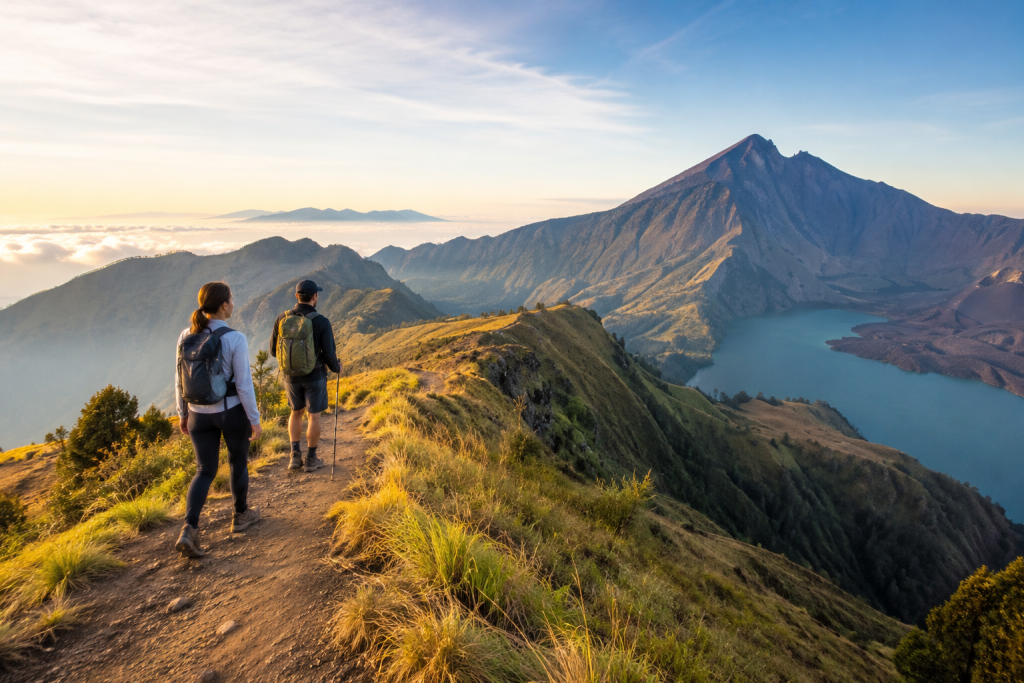
Did you know that Senaru, the main gateway to Mount Rinjani, sits at around 600 meters above sea level and is home to some of Lombok’s oldest trekking communities? This small village has quietly become the starting point for thousands of hikers every year who come to experience hiking Rinjani, one of Southeast Asia’s most rewarding volcano treks.
If this is your first time, expect a mix of excitement, doubt, and pure awe. Rinjani is not just a hike. It is a physical challenge, a mental test, and a deeply memorable journey. Here are 11 essential things every beginner should know before stepping onto the trail.
1. Rinjani Is Not a Casual Hike
Many first-time hikers underestimate Rinjani. It is not a walk in the park. The terrain ranges from forest trails to steep volcanic sand, especially near the summit.
You do not need to be an athlete, but basic fitness is important. Regular walking, light cardio, and leg endurance training a few weeks before your trip can make a huge difference.
2. Choose the Right Route and Duration
There are several trekking options, usually 2 days 1 night, 3 days 2 nights, or longer.
Shorter trips focus on the crater rim, while longer ones include the summit and Segara Anak lake. For beginners, the 3D2N route is often the best balance between challenge and enjoyment. It gives your body time to adapt and lets you fully experience hiking Rinjani.
3. Weather Can Change Quickly
Rinjani has a tropical mountain climate. Mornings can be warm, afternoons foggy, and nights extremely cold.
The dry season is generally the best time to hike, but sudden rain is still possible. Always prepare for unpredictable conditions. A lightweight rain jacket is not optional.
4. Night Temperature Can Be Freezing
One of the biggest surprises for first-timers is how cold it gets at night.
At higher camps, temperatures can drop close to freezing. If your gear is not adequate, sleeping becomes uncomfortable. Make sure your sleeping bag, jacket, and base layers are designed for cold weather.
5. Water Supply Is Limited on Certain Trails
Water sources are available, but not everywhere. On some routes, especially toward the summit, there is no water access.
This is where porters become extremely valuable. They carry water, food, and cooking equipment, allowing you to focus on the hike itself. Staying hydrated is critical, especially at higher altitudes.
6. Food on the Mountain Can Be Surprisingly Good
If you go with an organized trekking service, meals are usually prepared fresh by the team.
Expect simple but satisfying dishes like rice, noodles, eggs, vegetables, and even fresh fruit. After a long hike, even a basic meal can feel incredibly rewarding.
7. Toilets Are Basic or Nonexistent
Let’s be honest. Toilet facilities on Rinjani are limited.
At base camps, there may be simple toilets. Along the trail, you will rely on nature. Always carry tissue, hand sanitizer, and a small trash bag. Responsible hikers leave no trace behind.
8. Porters Are the Backbone of Your Journey
Porters are local heroes of hiking Rinjani. They carry tents, food, water, and sometimes even your personal belongings.
Hiring a porter not only makes your hike easier but also supports the local economy. It allows you to enjoy the experience without being overwhelmed by heavy loads.
9. Mobile Signal Is Weak or Unavailable
Do not expect reliable internet or phone signal during most of the trek.
This might feel uncomfortable at first, but it is also part of the magic. You disconnect from the digital world and reconnect with nature. Inform your family beforehand so they do not worry.
10. Follow National Park Rules Strictly
Mount Rinjani is a protected national park, and there are strict regulations in place.
These include:
- Registering before entering
- Staying on designated trails
- Not littering or damaging the environment
Breaking the rules can result in penalties, but more importantly, it harms the ecosystem. Respect the mountain.
11. Hiking Etiquette Matters
Good hiking etiquette improves everyone’s experience.
Simple practices include:
- Greeting fellow hikers
- Giving way on narrow trails
- Keeping noise levels low
- Carrying your trash back down
These small actions reflect respect for both nature and other trekkers.
Why Preparation Makes All the Difference?
The difference between a stressful hike and an unforgettable adventure often comes down to preparation.
When you understand the terrain, pack properly, and choose the right support system, hiking Rinjani becomes far more enjoyable. You are not just surviving the trek, you are actually experiencing it.
Plan Your Rinjani Trek with Confidence
If you prefer a smoother, well-organized journey, working with a local trekking team can make a big difference. Adi Trekker, based in Senaru, offers guided trekking experiences with experienced guides, reliable porters, and complete logistics support.
From permits to meals and camping equipment, everything is handled so you can focus on the adventure itself. For direct consultation, you can reach out via WhatsApp at +62819-9102-8066 or explore more details on their official website at https://www.aditrekker.com.
Final Thoughts on Hiking Rinjani
Hiking Rinjani is a powerful experience, especially for first-time hikers. It challenges your body, clears your mind, and rewards you with views that are hard to describe in words.
With the right preparation, mindset, and support, your first trek can become one of your most memorable journeys. Take the step, plan wisely, and let Rinjani show you what you are capable of.