
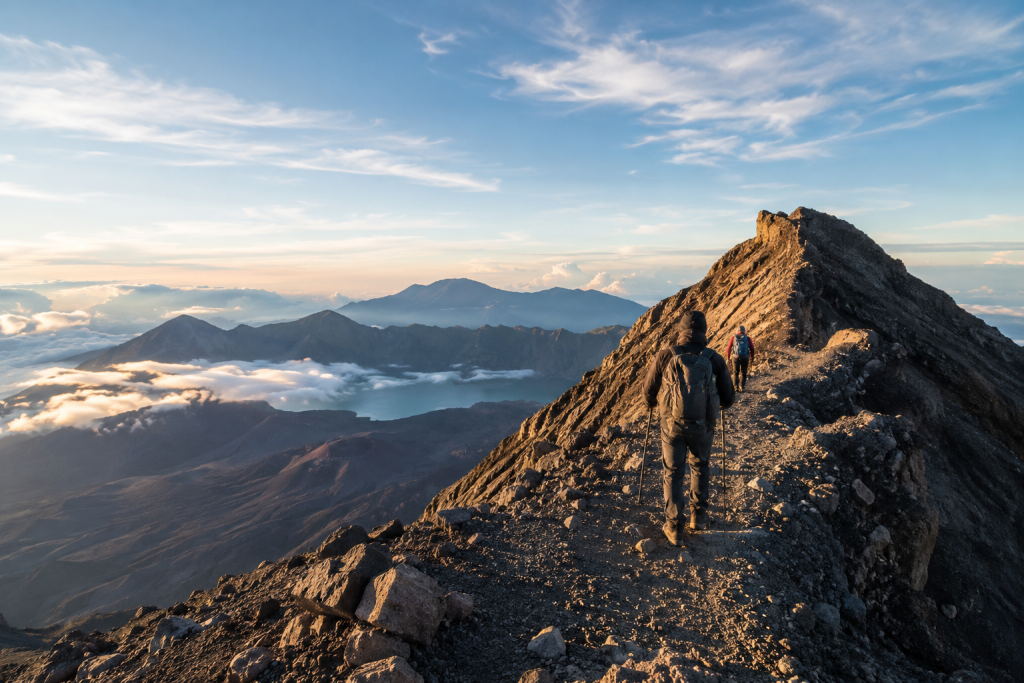
Less than 30 percent of trekkers who reach the crater rim of Mount Rinjani actually continue to the summit push. The reason is simple. The final climb is not just a hike. It is a mental and physical test that begins in the dark, on loose volcanic sand, with steep gradients that demand strategy more than strength.
If your goal is to stand on the highest point of Lombok, this guide will help you approach the mount rinjani summit with the right preparation, technique, and mindset.
Understanding the Summit Push
The summit attempt typically starts between 1:30 AM and 3:00 AM from the crater rim campsite, either Sembalun or Senaru route depending on your itinerary. The early start is not optional. It is essential.
You need enough time to reach the top before sunrise, avoid strong midday winds, and descend safely before the heat becomes exhausting. The climb itself can take anywhere from 3 to 6 hours depending on your pace and conditions.
What makes this section unique is the terrain. You are not walking on stable soil. You are climbing a steep slope of loose volcanic sand and gravel where every two steps forward can slide one step back.
Choosing the Right Start Time
Timing plays a critical role in your success rate. Starting too late reduces your margin for error, while starting too early without enough rest can drain your energy.
A practical approach is:
- Sleep early the evening before summit day
- Wake up at least 30 minutes before departure
- Eat a light but energy-rich meal
- Start no later than 3:00 AM
The earlier you begin, the more controlled your pace can be. You will also have a better chance to enjoy the sunrise from the peak, which is one of the most rewarding moments of the entire trek.
Mastering the Sand Trail Technique
The biggest challenge of the mount rinjani summit climb is the sandy slope. Walking normally will exhaust you quickly. You need to adapt your movement.
Instead of long strides, use short and consistent steps. Keep your body slightly leaning forward and let your feet dig gently into the sand rather than fighting it.
A simple rhythm works best:
- Step slowly and deliberately
- Pause briefly every few steps
- Maintain a steady cadence instead of rushing
Think of it as climbing a staircase that shifts beneath your feet. Patience is more effective than power.
Using Trekking Poles Effectively
Trekking poles are not optional on this section. They significantly reduce strain on your legs and improve balance on unstable ground.
When used correctly, poles help distribute your weight and provide extra grip. Adjust them slightly shorter than your usual trekking length for better control on steep terrain.
Key tips:
- Plant poles firmly before each step
- Use both arms to support your upward movement
- Keep your elbows slightly bent to absorb impact
Many experienced guides consider trekking poles essential equipment for summit attempts on Rinjani.
Breathing and Energy Management
One of the most common mistakes is poor breathing control. At higher altitude, oxygen levels drop, and your body needs more efficient breathing.
Avoid holding your breath or walking too fast. Instead, synchronize your breathing with your steps.
A simple pattern can help:
- Inhale for two steps
- Exhale for two steps
If you feel dizzy or overly fatigued, stop immediately and recover. Pushing through without control can lead to altitude-related issues or complete exhaustion before reaching the summit.
Wearing the Right Layers
The temperature near the summit can drop close to freezing before sunrise, especially during dry season. Wind chill can make it feel even colder.
Layering is key. You need warmth without restricting movement.
Recommended layers:
- Base layer that wicks sweat
- Insulating layer such as fleece or light down jacket
- Windproof outer layer
- Gloves and head covering
Avoid over-layering at the start. You will warm up quickly as you climb, and sweating too much can make you colder later.
Safety First: When to Stop
Reaching the summit is a great achievement, but not at the cost of your safety. Knowing when to stop is part of being a smart trekker.
You should consider turning back if you experience:
- Severe dizziness or nausea
- Signs of altitude sickness
- Extreme fatigue with no recovery after rest
- Strong winds or sudden weather changes
Guides are trained to assess these conditions. Always listen to their advice. The mountain will always be there, but your safety comes first.
Mental Strength Matters
The final stretch of the mount rinjani summit is often more mental than physical. The slow progress on sand can feel frustrating, especially in the dark.
Break the climb into small goals. Focus on reaching the next marker, not the entire summit. Celebrate small progress.
Remind yourself why you started. Whether it is the sunrise, the view, or personal achievement, keeping that purpose in mind can push you through the toughest sections.
Plan Your Summit with the Right Support
Climbing Rinjani is not just about reaching the top. It is about doing it safely, efficiently, and with the right support system. Choosing an experienced trekking organizer can make a significant difference in your summit success.
Adi Trekker, based in Senaru, Lombok, offers well-organized trekking experiences with professional guides who understand the mountain deeply. From logistics to safety, everything is handled so you can focus on the climb itself. For detailed itineraries and preparation support, visit https://www.aditrekker.com and explore the available trekking packages.
If you want direct guidance or have specific questions about your summit plan, you can also consult via WhatsApp at +62819-9102-8066. Getting expert advice before your climb can help you avoid common mistakes and improve your chances of reaching the summit.
Final Thoughts on Reaching the Mount Rinjani Summit
Reaching the mount rinjani summit is not about speed or strength alone. It is about strategy, patience, and knowing how to adapt to the mountain’s conditions. From choosing the right start time to mastering the sand trail and managing your energy, every detail matters.
Prepare well, listen to your body, and climb with awareness. When you finally stand at the top and watch the sun rise above Lombok, every step will feel worth it.