
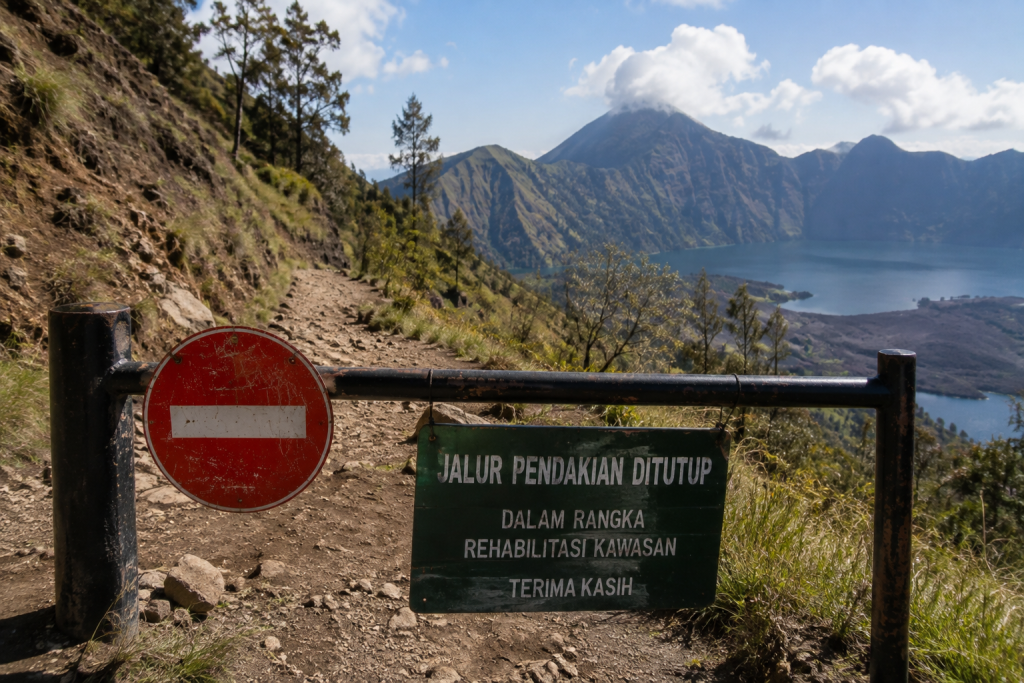
Every year, thousands of hikers dream of standing on the crater rim of Mount Rinjani at sunrise. But here’s a detail many first-time trekkers miss: Indonesia’s second highest volcano isn’t open for climbing all year round. For three months, the entire national park shuts its gates to hikers, no exceptions.
If you’re planning your first volcano trek and you’ve stumbled across the term “Rinjani National Park closed season,” you’re already ahead of most travelers. Knowing these dates before you book flights or accommodation can save you from a wasted trip. Let’s walk through everything you need to know.
What Is the Rinjani National Park Closed Season?
The closed season is an annual period when the Mount Rinjani National Park Authority (Balai Taman Nasional Gunung Rinjani, or BTNGR) suspends all trekking activity across the park. During this time, no permits are issued, no guides are allowed to lead groups, and every official trailhead is sealed off.
This isn’t a random decision made overnight. It’s a planned, recurring policy that hikers can actually prepare for well in advance.
When Does Mount Rinjani Close Each Year?
The closure generally begins on January 1 and runs through March 31. Trails typically reopen at the start of April, once park authorities confirm that weather and trail conditions are safe again.
Ticket bookings through the official reservation system usually stop a few days before the closure begins, and hikers already on the mountain are required to check out before the cutoff. Keep in mind that exact dates can shift slightly depending on weather patterns each year, so it’s worth confirming with a local operator like Adi Trekker before locking in your travel plans.
Why the Dates Matter More Than You Think
Many first-time hikers assume Lombok’s tropical climate means Rinjani is climbable year round. It isn’t. Booking a flight for February without checking the calendar first is one of the most common mistakes beginner trekkers make.
Why Does Rinjani Close for Three Months?
The short answer is safety, but there’s more to it than that.
Extreme Weather and Monsoon Rain
January through March falls squarely within Lombok’s rainy season transition. Heavy downpours, sudden storms, and low visibility make the steep volcanic slopes genuinely dangerous, not just uncomfortable.
Landslide and Erosion Risk
Rinjani’s trails are made of loose volcanic ash and soil. During heavy rain, this terrain becomes prone to landslides and severe erosion, putting both hikers and the mountain’s long-term trail infrastructure at risk.
Giving the Ecosystem Time to Recover
Rinjani welcomes a huge number of visitors during peak trekking months. The closed season gives plants, wildlife, and worn footpaths a chance to rest and regenerate before the next season of foot traffic begins.
Which Trails and Routes Are Affected?
Every official trekking route within the national park is closed during this period, including the ones Adi Trekker operates on:
- Sembalun route, the classic path to the summit
- Senaru route, popular for the crater rim trek
- Torean route, known for its scenic river crossings
There are no exceptions for private groups, sunrise-only hikes, or shorter one-day treks. If the park is closed, every route within its boundaries is off limits, regardless of package length or group size.
When Does Trekking Reopen After the Closed Season?
Trails officially reopen around April 1, once the national park authority completes its evaluation of trail conditions, facilities, and weather forecasts. From April through December, Rinjani is open for trekking, with the driest and most stable conditions generally falling between May and October.
Reservation systems typically open a few weeks before the reopening date, so hikers hoping to be among the first back on the mountain should plan ahead and book early, since daily hiker quotas fill up quickly once the season starts.
What Can You Do in Lombok While Rinjani Is Closed?
A closed trail doesn’t mean a wasted trip to Lombok. The island has plenty to offer even without a volcano summit on the itinerary.
Explore Lombok’s Waterfalls and Villages
The area around Senaru and Tetebatu is home to beautiful waterfalls and traditional village experiences that give visitors a genuine taste of local Sasak culture, no mountain gear required.
Island Hopping and Snorkeling at the Gili Islands
The Gili Islands, just a short boat ride from Lombok’s coast, offer calm turquoise water and easy snorkeling for travelers who still want an adventure without the trek.
City Tours Around Lombok
For a slower-paced day, exploring local markets, temples, and coastal towns gives a good sense of the island’s culture and daily life.
Adi Trekker organizes several of these experiences, including waterfall tours, Gili islands snorkeling trips, and Tetebatu village visits, so your Lombok trip stays full of activity even if the summit has to wait.
How to Plan Your Rinjani Trek Around the Closed Season
If your travel dates fall within January to March, consider shifting your trip to April onward, or plan a Lombok itinerary built around the island’s other attractions instead. If your dates are flexible, aiming for May through October generally offers the most stable weather and clearest summit views.
Either way, checking directly with an experienced local operator before booking flights is the safest move. Closure and reopening dates can shift slightly year to year based on weather forecasts, so real-time confirmation matters more than any fixed calendar.
Final Thoughts on the Rinjani National Park Closed Season
Understanding the Rinjani National Park closed season is one of the simplest ways to avoid disappointment on your first volcano trek. Mark the January to March window on your calendar, plan around it, and use the downtime to explore the rest of what Lombok has to offer.
With more than 15 years of experience guiding hikers up Rinjani from both Senaru and Sembalun, Adi Trekker knows these seasonal patterns inside and out. Our team can help you choose the right trekking dates, confirm current park status, and put together a package with everything included, from your guide and porters to camping equipment and meals.
Ready to plan your Rinjani adventure or explore Lombok while the trails are closed? Reach out to Adi Trekker today and let our local guides help you plan a trek and trip you won’t forget.
Adi Trekker can help you match the right package to your travel style, whether you are going as a beginner, an experienced hiker, a couple, or a group. For direct consultation, contact WhatsApp +62819-9102-8066 to discuss the best option, or explore more on https://www.aditrekker.com.