

Mount Rinjani is one of the most memorable trekking destinations in Lombok, but it is also a mountain that should not be underestimated.
If you are relatively new to mountain trekking, one question will probably come up before you start comparing packages:
Is Rinjani trekking safe for beginners?
The short answer is: Rinjani can be suitable for hikers with limited experience who are physically prepared, choose an appropriate itinerary, trek with proper guidance, and follow current national park regulations.
However, Rinjani should not be treated as an easy first walk in the mountains.
The trek involves long hours of walking, significant elevation changes, uneven terrain, changing weather, camping at altitude, and, depending on the itinerary, a demanding summit section.
There is also an important distinction between being a Rinjani beginner and someone who has never climbed any mountain before.
As of June 2026, Gunung Rinjani National Park’s official mandatory trekking rules state that hikers must have previous mountain-hiking experience that can be demonstrated through photos, certificates, or an interview.
That means complete first-time mountain hikers should check the latest entry requirements before making a booking.
This guide explains the difficulty of Rinjani, what beginners should expect, how to assess your fitness, which trekking options may be more realistic, and how to prepare before choosing a package.
Table of Contents
- Is Rinjani Trekking Safe for Beginners?
- Important 2026 Rules Beginners Should Know
- How Difficult Is Mount Rinjani?
- What Makes the Trek Challenging?
- Do Beginners Need to Reach the Summit?
- Which Rinjani Itinerary Is Better for Beginners?
- How to Assess Your Fitness
- How Much Training Do You Need?
- Why Guides and Porters Matter
- Altitude and Weather Considerations
- What Gear Should Beginners Prepare?
- Solo Travelers, Couples, and Sharing Trips
- Common Beginner Mistakes
- Beginner Safety Checklist
- Frequently Asked Questions
Is Rinjani Trekking Safe for Beginners?
Rinjani trekking can be manageable for hikers who are relatively new to trekking, but safety depends on several factors rather than experience alone.
The most important factors include:
- Physical fitness
- Previous hiking experience
- Selected route
- Trekking duration
- Walking pace
- Weather and trail conditions
- Guide instructions
- Personal health
- Preparation before departure
A traveler who has completed a few easier hikes, exercises regularly, and chooses a realistic Rinjani itinerary may be better prepared than someone with more trekking experience who arrives exhausted or chooses an itinerary that is too aggressive.
The key is not asking only:
“Can a beginner climb Rinjani?”
A better question is:
“Which Rinjani experience matches my current fitness and hiking experience?”
That approach leads to a much safer and more realistic decision.
Important 2026 Rules Beginners Should Know
Before discussing fitness or itinerary options, beginners need to understand the current national park regulations.
Gunung Rinjani National Park published updated mandatory rules for hikers in June 2026.
The requirements include trekking in a group of at least two people, using a guide or experienced companion, following environmental rules, and having previous mountain-hiking experience that can be demonstrated.
This is particularly important because some older travel articles describe Rinjani as a possible first-ever mountain climb.
Current regulations mean travelers should confirm eligibility before assuming they can use Rinjani as their first mountain experience.
Always review the official Gunung Rinjani National Park trekking requirements before booking because regulations can change.
For travelers who already have some basic mountain experience but have never trekked Rinjani before, the next question becomes choosing a realistic route and itinerary.
How Difficult Is Mount Rinjani for Beginners?
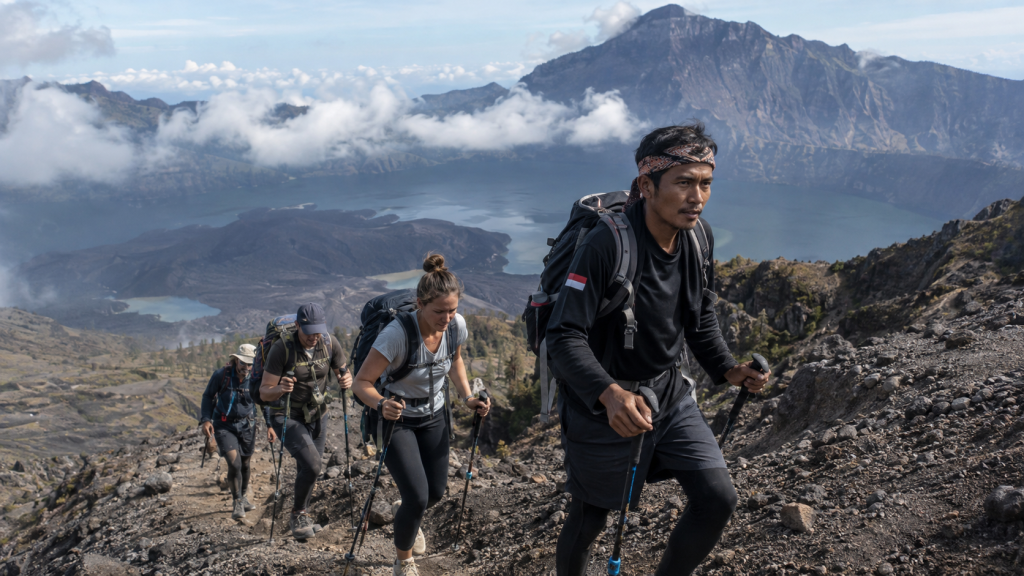
There is no single difficulty rating that accurately describes every Rinjani trek.
A crater-rim itinerary and a summit-focused itinerary can feel very different.
Your experience also depends on fitness, weather, trail conditions, backpack weight, sleep quality, and how well your body responds to elevation.
As a general comparison:
| Trekking Option | Relative Challenge | What Beginners Should Know |
| One Day Hike | Moderate to challenging | Shorter commitment but can still involve significant hiking |
| Senaru Crater Rim 2D1N | Moderate to challenging | Scenic option without automatically requiring a summit attempt |
| Summit 2D1N | Very challenging | Faster schedule with demanding summit-focused trekking |
| Summit 3D2N | Challenging | More time than 2D1N, but still physically demanding |
| Longer 4D3N itinerary | Challenging | More days on the mountain but potentially less compressed pacing |
This table should be treated as a general guide rather than a guarantee.
Individual fitness and actual trail conditions can significantly change how difficult a trek feels.
Before choosing based only on duration, compare the Mount Rinjani trekking packages and itinerary options and consider what each itinerary actually requires.
What Makes Rinjani Trekking Challenging?
Rinjani is rarely difficult because of just one factor.
The challenge usually comes from several physical demands happening together.
Long Walking Hours
You do not need to be an elite athlete to trek Rinjani, but basic endurance matters.
Walking on a mountain trail for several hours requires more energy than walking the same amount of time on flat city streets.
You may also need to repeat that effort the following morning.
On a multi-day trek, the challenge is not simply finishing Day 1.
You need enough recovery capacity to continue on Day 2 and possibly Day 3 or Day 4.
Elevation Changes
Uphill trekking requires sustained leg strength and cardiovascular endurance.
Downhill sections can also be tiring because your legs continuously work to stabilize your body.
This is why someone who can comfortably walk 10 kilometers on flat pavement may still find mountain trekking difficult.
Uneven Terrain
Rinjani trails can include forest paths, dirt tracks, rocky sections, ridges, and loose volcanic terrain depending on the route.
This changes your walking rhythm and requires more concentration than a paved path.
Repeated Physical Effort
A multi-day trek means your muscles may already feel tired when the next trekking day begins.
Beginners often underestimate this cumulative fatigue.
Training should therefore prepare you not only for one hard workout but for maintaining moderate physical activity consistently.
Should Beginners Immediately Attempt the Rinjani Summit?
Not necessarily.
Summit photographs are one of the main reasons travelers become interested in Mount Rinjani.
However, reaching the highest point does not have to be the goal of every trip.
A summit-focused itinerary normally requires greater physical effort and may involve trekking during very early morning hours.
For someone who is still developing mountain experience, choosing a crater-rim or less aggressive itinerary can provide a meaningful Rinjani experience without making the summit the only measure of success.
The mountain experience includes much more than the summit:
- Volcanic landscapes
- Forest trails
- Crater views
- Camping
- Sunrise
- Local trekking culture
- The experience of spending several days outdoors
If you are unsure whether your goal should be the summit or crater rim, read the Mount Rinjani route guide covering Sembalun and Senaru before choosing your package.
The right route should match your ability rather than your social-media expectations.
Which Rinjani Itinerary Is Better for Beginners?
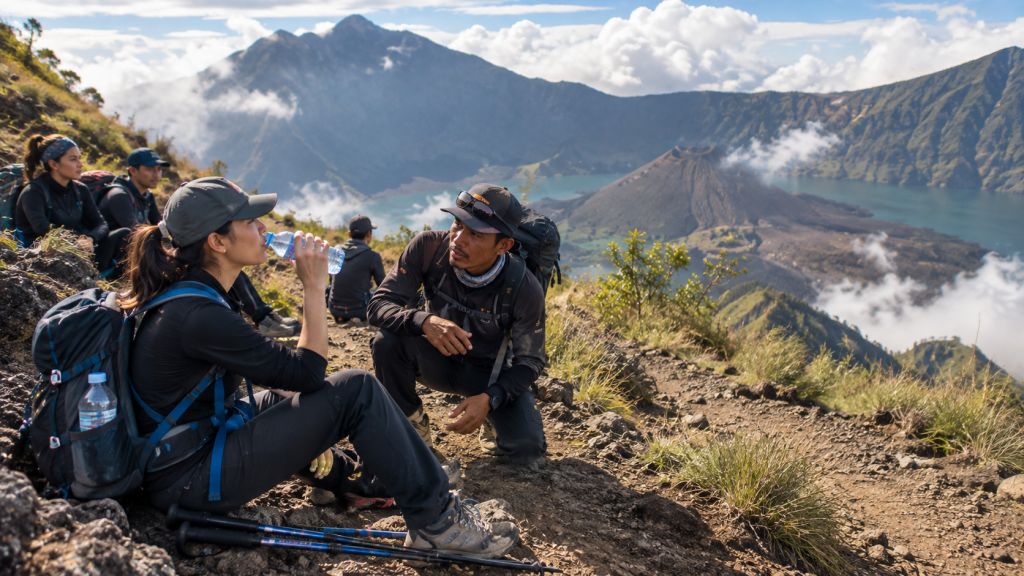
A common mistake is assuming the shortest itinerary must also be the easiest.
That is not always true.
Completing a demanding route in fewer days can make each trekking day more intense.
A longer itinerary means spending more days on the mountain, but it can sometimes provide a less compressed schedule.
Adi Trekker offers different options including summit-oriented programs, Senaru Crater Rim trips, and other Rinjani trekking itineraries.
When comparing them, consider four factors.
Your Fitness Level
How regularly do you exercise?
Can you walk uphill comfortably?
Are you accustomed to several hours of continuous activity?
Your Previous Experience
Current TNGR regulations require previous mountain-hiking experience, so consider what terrain and hiking duration you have already completed.
Your Available Time
Do not choose a rushed trekking itinerary simply because your Lombok schedule is too tight.
Allow time before the trek to rest and time afterward to recover.
Your Goal
Do you mainly want scenery and the mountain experience, or is reaching the summit an important personal goal?
Your answer can completely change which itinerary makes the most sense.
For a clearer overview, explore the available Mount Rinjani trekking packages based on duration and route.
How Can You Assess Your Fitness Before Trekking Rinjani?
There is no universal fitness test that guarantees whether someone will find Rinjani easy or difficult.
However, several practical questions can help.
Ask yourself:
- Can I walk continuously for several hours?
- Can I climb stairs without becoming exhausted quickly?
- Do I exercise several times per week?
- Have I previously walked on uneven hiking terrain?
- Can I remain active again the day after a difficult workout?
- Am I comfortable carrying my personal daypack?
- Do I recover reasonably well after physical activity?
If everyday moderate exercise already feels extremely difficult, build your fitness before choosing a demanding Rinjani itinerary.
Your goal is not to become the fastest person in the trekking group.
The goal is to develop enough endurance to move steadily for long periods.
How Much Training Should Beginners Do?
Preparation should begin before arriving in Lombok.
A practical training routine can include:
- Regular brisk walking
- Stair climbing
- Light hiking
- Squats and lunges
- Step-ups
- Basic core exercises
- Longer weekend walks
- Walking while carrying a light backpack
Gradually increasing duration is usually more useful than doing one extremely hard workout immediately before your trip.
For travelers who want a more structured preparation program, follow this 30-day beginner mountain-climbing training plan to gradually build endurance and leg strength.
Try to avoid arriving at your trek already tired from poor sleep, excessive travel, or intense activity the previous day.
Recovery is part of preparation too.
Why Guides Matter for First-Time Rinjani Trekkers
For beginners, a trekking guide does much more than show the direction.
A guide helps manage the journey based on conditions on the trail.
That can include:
- Setting an appropriate pace
- Coordinating stops
- Monitoring the group
- Explaining route conditions
- Helping participants make realistic decisions
- Adjusting plans when necessary
Current TNGR regulations also emphasize the importance of guided or experienced support during the climb.
Adi Trekker works with local trekking guides and porters from Senaru and Sembalun.
For participants, communication with the guide is essential.
If you feel unusually exhausted, dizzy, sick, or uncomfortable, say so early.
Do not hide physical problems simply because other participants appear stronger.
What Do Porters Do?
Porters help manage the logistics required for multi-day trekking.
Depending on the package, this can include transporting:
- Camping equipment
- Cooking equipment
- Food
- Water
- Group supplies
This makes trekking logistics significantly easier for participants.
However, having porters does not remove the physical challenge of Rinjani.
You still need to walk the route yourself and normally carry your essential personal items.
If you need additional assistance with personal belongings, ask the operator in advance whether a personal porter can be arranged.
Does Altitude Matter on Mount Rinjani?
Yes.
Mount Rinjani’s summit reaches approximately 3,726 meters above sea level, so travelers heading toward the summit should be aware of altitude-related symptoms.
Altitude illness can affect people regardless of how fit they are.
According to the CDC guidance on high-altitude travel and altitude illness, susceptibility is influenced more by altitude, rate of ascent, and individual response than physical fitness alone.
Possible early symptoms of acute mountain sickness can include:
- Headache
- Fatigue
- Dizziness
- Reduced appetite
- Nausea
- Vomiting
Do not ignore worsening symptoms simply because reaching the summit is important to you.
If symptoms develop, communicate with your guide and follow appropriate advice.
Travelers with existing heart, lung, or other relevant health conditions should consider discussing high-altitude travel with a healthcare professional before the trip.
Weather and Trail Conditions Can Change
Even a perfectly prepared trekker cannot control mountain weather.
Conditions can influence visibility, temperature, trail difficulty, and trekking decisions.
Check the official BMKG weather forecast for North Lombok before departure, but remember that a regional forecast cannot guarantee conditions at higher elevations.
Mountain conditions may differ from lower-altitude towns.
During the trek, current conditions and instructions from guides or national park authorities should take priority over a forecast you checked several days earlier.
A responsible mindset is important:
The itinerary is a plan, not a guarantee.
What Gear Should Beginners Prepare?
Even when an operator provides major camping equipment, you still need suitable personal trekking gear.
Typical personal items include:
- Proper trekking or hiking shoes
- Comfortable hiking clothing
- Warm layers
- Rain protection
- Sun protection
- Hat or cap
- Headlamp
- Personal medication
- Small daypack
- Reusable water bottle
- Personal hygiene items
- Spare socks
Avoid testing brand-new shoes for the first time on trekking day.
Wear them beforehand so you know they are comfortable.
Adi Trekker provides trekking support and camping equipment within its packages, but always confirm the latest package inclusions and exclusions before departure.
You can also read this complete Mount Rinjani guide covering routes, permits, weather, and trekking preparation before your trip.
Is Rinjani Suitable for Solo Travelers?
Solo travelers can trek through an organized service rather than hiking independently.
Depending on availability and preference, they may choose between sharing and private formats.
A sharing trip can suit travelers who:
- Enjoy meeting other hikers
- Want a social trekking experience
- Are comfortable adapting to group pace
A private trek may suit travelers who:
- Prefer more privacy
- Want a quieter experience
- Prefer a trip focused on their own needs
If you are deciding between the two formats, see the Mount Rinjani sharing trekking package before booking.
Trip format does not determine whether Rinjani is physically suitable for you.
Fitness and itinerary selection still matter.
What About Couples and Honeymooners?
Rinjani can be a memorable adventure for couples, but both travelers should evaluate their own ability honestly.
Do not select the itinerary based only on the stronger person’s fitness.
If one partner exercises regularly while the other has limited trekking experience, choose a route both people can realistically manage.
For couples or honeymooners who prioritize privacy, a private trek can provide a more personal experience.
However, comfort and safety should still come before completing a specific itinerary.
Common Mistakes Beginners Should Avoid
One of the biggest mistakes is starting too fast.
Beginners sometimes try to match stronger hikers during the first few hours and use more energy than necessary.
Maintain a steady pace instead.
Another mistake is focusing too much on the summit.
Turning around, resting longer, or adjusting an itinerary is not failure when conditions make continuing inappropriate.
Also avoid:
- Underestimating hydration
- Wearing unsuitable shoes
- Arriving sleep-deprived
- Ignoring physical symptoms
- Choosing a package based only on price
- Hiding your experience level from the operator
- Assuming good fitness eliminates altitude risk
- Ignoring weather or guide instructions
Trekking is not a race.
A successful trip is one where you make responsible decisions and enjoy the experience safely.
Beginner Safety Checklist Before Booking
Before choosing a Rinjani trekking package, confirm that you:
- Meet current national park trekking requirements
- Have suitable previous hiking experience
- Understand your selected route
- Know the approximate physical demands
- Have trained before departure
- Are using appropriate footwear
- Understand what the package includes
- Know what personal equipment to bring
- Have checked current weather information
- Understand altitude symptoms
- Have disclosed relevant physical concerns
- Are willing to follow the guide’s decisions
For additional planning, read the complete Mount Rinjani trekking guide for routes, permits, weather, and safety before departure.
Frequently Asked Questions About Rinjani Trekking for Beginners
1. Can a Complete Beginner Trek Mount Rinjani?
Travelers with limited trekking experience may be able to trek Rinjani with appropriate preparation and itinerary selection.
However, current Gunung Rinjani National Park rules published in June 2026 require hikers to have previous mountain-hiking experience that can be demonstrated.
Complete first-ever mountain hikers should therefore check eligibility and current regulations before booking.
2. Is Mount Rinjani Difficult for Beginners?
Yes, Rinjani can be physically challenging.
Long walking hours, elevation gain, uneven terrain, multi-day fatigue, weather, and altitude can all contribute to the difficulty.
The level of challenge depends significantly on the route and itinerary.
3. Should Beginners Choose a 2D1N or 3D2N Rinjani Trek?
Do not decide based only on the number of days.
A shorter summit itinerary can be more compressed and physically demanding, while a longer itinerary keeps you on the mountain for more time.
Compare the daily itinerary, route, elevation, and your fitness before choosing.
4. How Should I Train Before Trekking Rinjani?
Build endurance through regular walking, stair climbing, hiking, and leg-strength exercises.
Gradually increase training duration and include some activity on consecutive days so your body becomes more accustomed to repeated physical effort.
You can start with this 30-day training guide for beginner mountain hikers.
5. Is Altitude Sickness Possible on Mount Rinjani?
Yes.
The summit is above 3,700 meters, and altitude illness can affect travelers regardless of fitness.
Learn the symptoms, avoid ignoring worsening signs, communicate with your guide, and seek appropriate medical advice if you have health concerns before high-altitude travel.
So, Is Rinjani Trekking Safe for Beginners?
Rinjani trekking can be appropriate for hikers who are still relatively new to mountain trekking, provided they meet current regulations, have suitable physical preparation, choose a realistic itinerary, and follow professional guidance.
But Rinjani is not a casual walk.
It requires endurance, appropriate equipment, responsible decision-making, and respect for changing mountain conditions.
The safest approach is not to choose the most impressive itinerary.
Choose the itinerary that matches your actual fitness, previous hiking experience, available time, and travel goals.
If your current goal is simply to experience Rinjani rather than immediately reach the summit, a crater-rim or more suitable itinerary may offer a better introduction.
If you already have hiking experience and are considering a summit program, make sure you understand the additional demands before booking.
Adi Trekker organizes Mount Rinjani trekking experiences with local guides and porters from Senaru and Sembalun and provides different itinerary options for different travel styles.
Explore Mount Rinjani trekking packages from Adi Trekker to compare routes and trekking durations.
Not sure which trek matches your fitness and previous hiking experience?
Contact Adi Trekker directly on WhatsApp for a trekking recommendation based on your travel dates, fitness level, previous hiking experience, and preferred itinerary.
You can also visit the official Adi Trekker website to explore more Mount Rinjani trekking options.
The best first Rinjani experience is not necessarily the hardest one.
It is the one you are properly prepared to complete responsibly.