
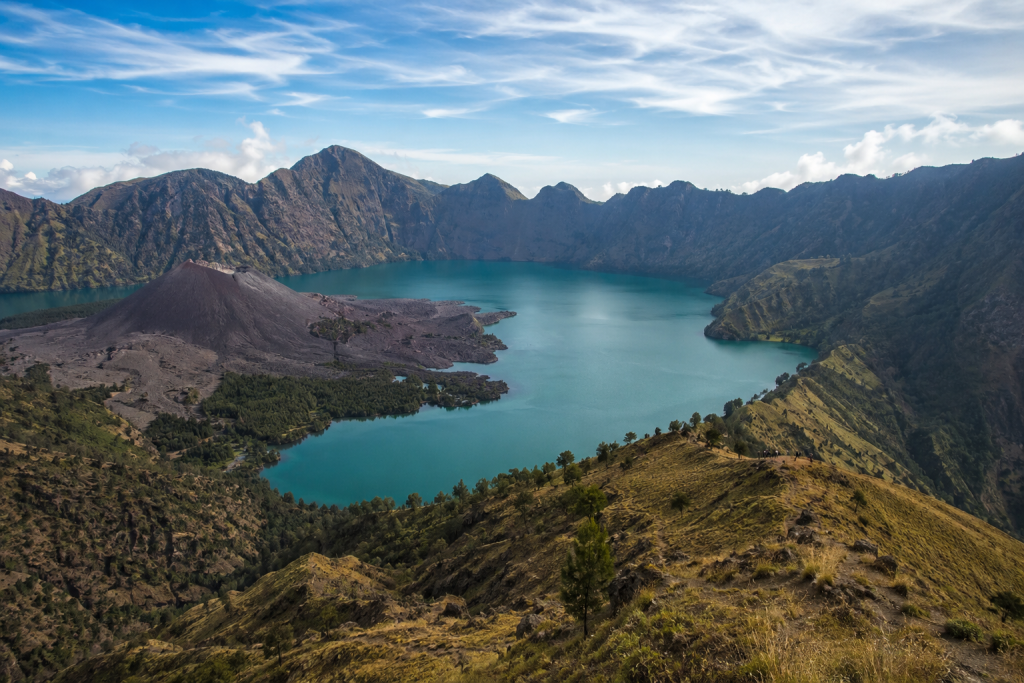
Imagine standing on the rim of an ancient volcano, looking down at a lake so blue it seems painted onto the landscape. That is Segara Anak, and it sits more than 2,000 meters above sea level inside the crater of Mount Rinjani. For most people who trek this mountain, this lake is not just a stop along the way. It is the moment the whole journey starts to make sense.
If you are planning your first volcano trek and searching for what Segara Anak Lake Rinjani actually looks like, how to reach it, and what to expect once you get there, this guide walks you through everything in plain, practical terms.
What Is Segara Anak Lake
Segara Anak means “child of the sea” in the local Sasak language, and the name fits. The lake formed thousands of years ago after a colossal eruption caused the summit of old Rinjani to collapse inward, leaving behind a massive caldera that slowly filled with water.
Today the lake stretches across a large portion of that caldera floor, with an average depth that shifts depending on rainfall and seismic activity in the area. Its crescent shape and vivid blue-green color come from mineral deposits and volcanic sediment beneath the surface.
Right beside it rises Gunung Barujari, a younger volcanic cone that occasionally still shows signs of activity. Watching steam or smoke drift from Barujari while camped near the lake is one of those details that makes the whole scene feel alive rather than just scenic.
Who Visits Segara Anak and Why It Matters to Them
Trekkers come to Segara Anak for very different reasons, and that is part of what makes the place special. Some are chasing the physical challenge of reaching the summit and see the lake as a resting point along the way. Others treat the lake itself as the main destination, especially those doing shorter itineraries like the Senaru Crater Rim trek.
Local communities in Lombok also hold the lake in high regard. Many Sasak and Balinese Hindu visitors consider it a sacred site, and it is common to see small offerings left near the water or hear stories about spiritual pilgrimages tied to specific times of year.
For first-time hikers, understanding this dual identity, part natural wonder and part cultural landmark, adds real depth to the experience. It is not just a nice photo stop. It carries meaning for the people who live in its shadow.
When Is the Best Time to See the Lake
Mount Rinjani National Park typically opens for trekking from around April through December, with the park closing during the wettest months to protect both the trails and the trekkers who use them. Within that open season, the driest and most stable weather usually falls between June and September.
Trekking during these months means clearer skies, firmer trails, and a much better chance of seeing the lake without cloud cover blocking the view from above. Shoulder months like April, May, October, and November can still work well, though rain gear becomes more important.
Whatever month you choose, mornings tend to offer the calmest weather at the crater rim. Afternoon clouds often roll in and obscure the view, so early arrival at the rim rewards patient hikers.
Where Segara Anak Sits Along the Trekking Routes
Segara Anak lies inside the Rinjani caldera, and reaching it depends heavily on which route you choose to start your trek.
Access From the Senaru Route
Hikers starting from Senaru Village typically reach the crater rim on the first day, then descend toward the lake either that same afternoon or early the next morning. The descent from the rim down to the lakeshore is steep and involves loose volcanic gravel, so trekking poles and sturdy boots make a real difference here.
Access From the Sembalun Route
Trekkers coming from Sembalun usually pass by or near the lake on their way toward the summit push or on their return journey, depending on the itinerary. This route offers a different perspective, with wide savanna landscapes leading up to the crater before the terrain shifts to volcanic rock near the rim.
Access From the Torean Route
The Torean route is less commonly used by first-timers but offers a quieter, more remote approach to the lake area. It is generally recommended for hikers with some trekking experience, since the trail conditions can be more technical.
Why Segara Anak Is the Highlight for So Many Trekkers
Beyond the obvious scenery, a few specific draws keep bringing hikers back to this spot.
The Natural Hot Springs
Just a short walk from the main camping area near the lake, natural hot springs bubble up from the volcanic ground. After a long, tiring descent, soaking tired legs in warm mineral water ranks among the most memorable parts of the entire trek.
Fishing in the Crater Lake
Segara Anak is stocked with fish, and many trekking groups bring simple fishing lines to try their luck in the late afternoon or early evening. It is a relaxed, low-key activity that fits naturally into camp life.
The Contrast of Landscapes
Few places let you stand beside a placid lake while an active volcanic cone smolders just meters away. That contrast between calm water and raw geological power is something photographs rarely capture fully, which is exactly why so many hikers say the lake has to be experienced in person.
How to Prepare Before Descending to the Lake
Getting down to Segara Anak safely takes some planning, and a bit of preparation goes a long way toward making the experience enjoyable rather than exhausting.
Physical Preparation
The descent involves loose scree and a steep gradient that can strain knees and ankles. Basic cardiovascular fitness combined with some pre-trip leg conditioning makes the walk down, and especially the climb back up, considerably more manageable.
Gear Checklist
A few essentials matter most here: sturdy trekking shoes with good grip, trekking poles for the steep sections, a headlamp for early morning or late evening movement around camp, and a warm layer since temperatures near the lake drop noticeably after sunset.
National Park Camping Rules
Camping near Segara Anak is only permitted in designated zones within the national park, and open fires outside approved areas are prohibited. Visitors are expected to pack out all trash, which supports the park’s broader eco-tourism and zero waste efforts.
Water and Food Considerations
While the lake itself is not a recommended drinking water source without proper treatment, most trekking operators supply safe drinking water throughout the trip. Full board meals prepared at camp typically use ingredients carried in by porters, keeping the experience both safer and more comfortable.
Making the Most of Your Time at the Lake
Once you arrive, resist the urge to rush straight to the next activity. Sit by the water for a while. Watch the light change over Barujari as the afternoon fades. Listen to the quiet, which feels different at 2,000 meters than it does anywhere else.
Many first-timers admit that the lake, not the summit, ends up being the part of the trip they think about most once they are home. There is something grounding about camping beside water that formed from one of the most powerful natural events the island has ever seen.
Final Thoughts on Visiting Segara Anak Lake
Segara Anak Lake Rinjani is more than a scenic stop on the way to the summit. It is a place shaped by volcanic history, held sacred by local communities, and treasured by hikers for its hot springs, fishing, and dramatic setting beside an active cinder cone. Reaching it safely takes preparation, the right gear, and respect for national park rules, but the reward is an experience that stays with you long after the trek ends.
If you are ready to see Segara Anak Lake for yourself, Adi Trekker has organized Mount Rinjani treks for more than 15 years, working with experienced local guides and porters from Senaru and Sembalun. Our packages include return transport, national park entrance fees, an English-speaking guide, full board meals, safe drinking water, and complete camping equipment, along with both private and sharing trip options. Reach out to Adi Trekker today to plan your Rinjani trek and experience Segara Anak Lake in person.
Adi Trekker can help you match the right package to your travel style, whether you are going as a beginner, an experienced hiker, a couple, or a group. For direct consultation, contact WhatsApp +62819-9102-8066 to discuss the best option, or explore more on https://www.aditrekker.com.