
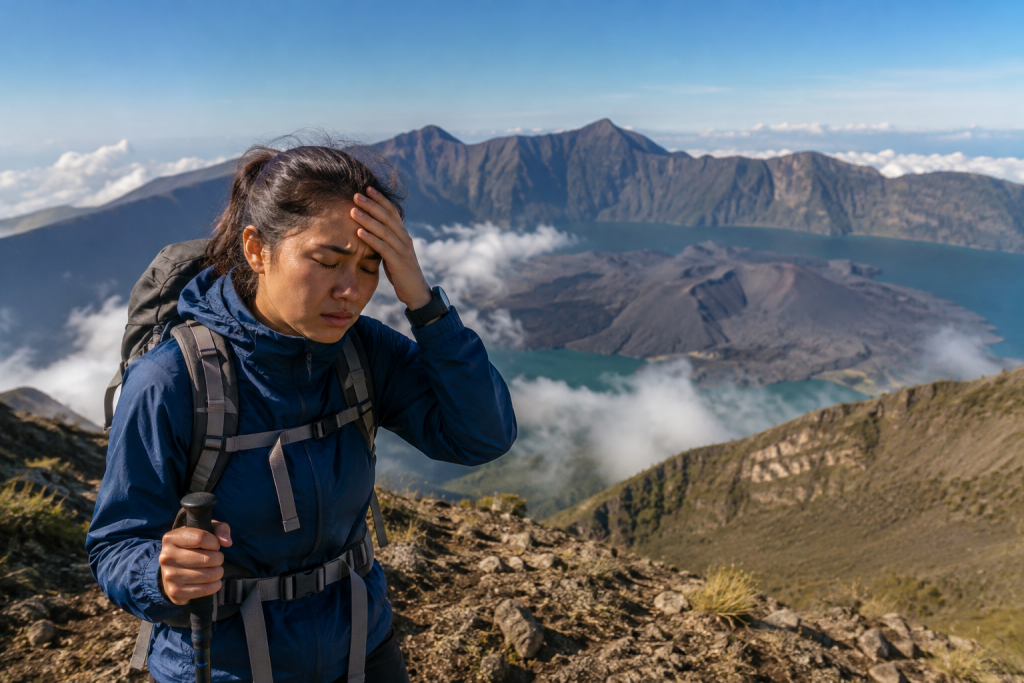
Every year, thousands of hikers attempt Mount Rinjani, and a fair share of them feel some form of altitude sickness before they ever reach the crater rim. It is not a rare inconvenience reserved for elite mountaineers. It can affect a fit twenty five year old just as easily as someone climbing their first volcano.
Understanding altitude sickness on Rinjani is not about scaring you away from the trek. It is about preparing you to enjoy one of Indonesia’s most rewarding hikes safely, with a clear head and steady legs, right up to that unforgettable sunrise view.
What Exactly Is Altitude Sickness
Altitude sickness happens when your body cannot get enough oxygen fast enough as you climb higher. The technical term is Acute Mountain Sickness, or AMS, and it is your body’s honest signal that it needs more time to adjust.
On Rinjani, this usually starts to matter once you pass around 2,500 to 3,000 meters. That range covers much of the trail between the crater rim campsites and the summit itself.
Common Symptoms to Watch For
The early signs are easy to dismiss as ordinary tiredness, which is exactly why so many hikers ignore them. A persistent headache, mild nausea, dizziness, and unusual fatigue are often the first clues.
As symptoms progress, some hikers notice a loss of appetite, trouble sleeping, or shortness of breath even while resting. None of these should be brushed off as simply part of a tough hike.
Who Is Most Likely to Feel It
Altitude sickness does not discriminate based on age or athletic background. Marathon runners have struggled on Rinjani while casual walkers have summited without any trouble at all.
What actually raises the risk is ascending too quickly, skipping rest breaks, and not giving your body enough time to acclimatize. Dehydration and poor sleep the night before also make symptoms more likely to appear.
First-Time Hikers Face a Steeper Learning Curve
If this is your first volcano trek, you likely have no personal reference point for how your body handles altitude. That uncertainty is normal, and it is one more reason to pace yourself conservatively rather than trying to match a faster group.
When Symptoms Typically Show Up
Most hikers who experience altitude sickness on Rinjani notice it during the final stretch toward the summit, when the trail climbs steeply in a short distance. This section is often tackled in darkness during the early morning push, which can make symptoms feel more disorienting.
Symptoms can also appear earlier, at the crater rim campsites, particularly for hikers who arrived already dehydrated or exhausted from the day’s climb.
Where the Risk Increases on the Trail
Whether you choose the Sembalun route, the Senaru route, or a combination through Torean, the risk pattern is similar. The higher you climb above the crater rim, the thinner the air becomes and the more your body has to work.
The final summit assault, with its loose volcanic gravel and steady incline, is where fatigue and reduced oxygen combine most noticeably. This is precisely why a slow, steady pace matters more here than anywhere else on the mountain.
Why This Happens: The Science Made Simple
As you climb higher, atmospheric pressure drops, and with it the amount of oxygen available in each breath. Your body responds by breathing faster and your heart working harder to move oxygen through your bloodstream.
Given enough time, your body adapts. The problem arises when hikers climb faster than their body can adjust, which is essentially what altitude sickness represents.
How to Reduce Your Risk Before and During the Trek
Prioritize Steady Acclimatization
Choosing a longer itinerary, such as a 3 day 2 night or 4 day 3 night Rinjani package instead of rushing a 2 day route, gives your body more time to adjust gradually. Spending an extra night at the crater rim before attempting the summit can make a genuine difference.
Stay Hydrated Throughout the Day
Dehydration mimics and worsens many altitude sickness symptoms, including headaches and fatigue. Drink water consistently throughout the day rather than waiting until you feel thirsty, and avoid excessive caffeine or alcohol the night before summit day.
Pace Yourself Deliberately
Walking slower than you think necessary is often the smartest strategy at altitude. Short, steady steps with controlled breathing will get you further than fast bursts followed by exhausted stops.
Eat Enough, Even Without Appetite
Appetite naturally drops at higher elevation, but your body still needs fuel. Small, frequent snacks are easier to manage than large meals when you are not feeling hungry.
Get Enough Rest Before Summit Night
Arriving at Rinjani already sleep deprived from travel makes altitude symptoms more likely. Try to rest properly in the days leading up to your trek, especially the night before the summit push.
When to Stop and Turn Back
Mild symptoms like a slight headache or tiredness are common and often improve with rest, water, and a slower pace. However, worsening symptoms such as severe headache, persistent vomiting, confusion, or difficulty breathing while resting are signs that continuing higher is not a good idea.
Listening to your guide matters here. Experienced Rinjani guides recognize these warning signs early and will recommend descending or pausing the ascent when necessary, and that advice should always be taken seriously.
Final Thoughts on Staying Safe at Altitude
Altitude sickness on Rinjani is manageable when you understand its causes, recognize its symptoms early, and respect your body’s pace. A gradual ascent, consistent hydration, proper rest, and honest self awareness go a long way toward a safe and enjoyable summit experience.
Adi Trekker has organized Rinjani treks for more than 15 years, working with experienced local guides and porters from Senaru and Sembalun who understand how to help hikers acclimatize safely along the way. If you are planning your first volcano trek and want a well paced itinerary with proper camping equipment, full board meals, and a guide who knows the mountain well, reach out to Adi Trekker to plan a Rinjani summit trip that fits your pace and experience level.
Adi Trekker can help you match the right package to your travel style, whether you are going as a beginner, an experienced hiker, a couple, or a group. For direct consultation, contact WhatsApp +62819-9102-8066 to discuss the best option, or explore more on https://www.aditrekker.com.