
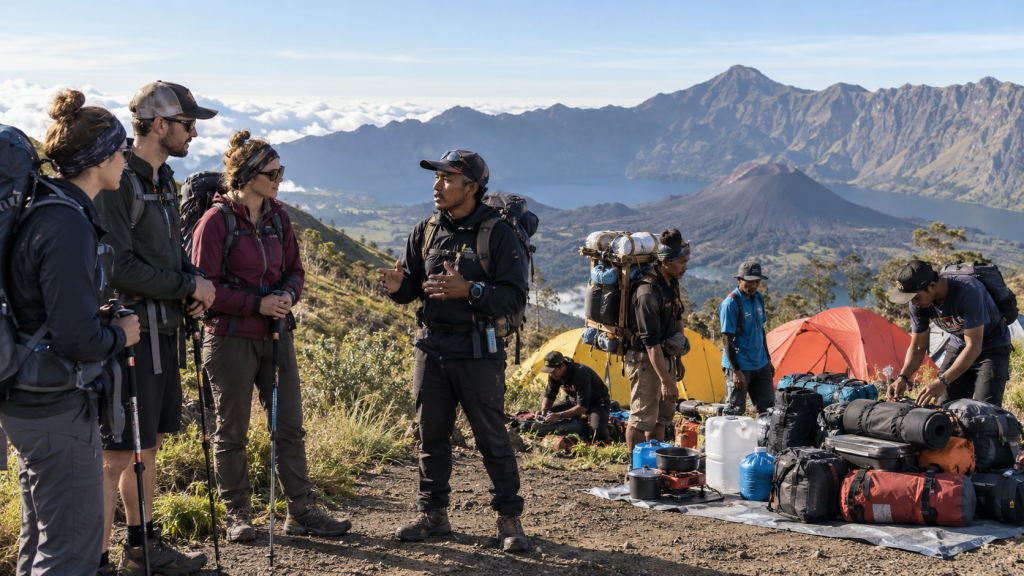
Planning your first Mount Rinjani trek is exciting, but choosing the right trekking agency can be one of the most confusing parts of the process.
There are 2-day 1-night, 3-day 2-night, and 4-day 3-night trekking packages, along with different route options such as Sembalun, Senaru, and Torean. Each route and duration offers a different trekking experience.
The differences are not only about how many days you spend on the mountain.
The quality of the trekking guides, porters, camping equipment, meals, transportation, group size, and how an operator responds to changing weather or trail conditions can significantly affect your overall experience.
That is why knowing how to choose a Rinjani trekking agency is just as important as choosing your itinerary.
If this is your first Mount Rinjani trek, use these seven questions to compare trekking operators more objectively before making a booking.
Table of Contents
- Is the trekking agency experienced and professionally operated?
- What is included in the Rinjani trekking package?
- How experienced are the guides and porters?
- How does the operator manage trekking safety?
- How many people are in one trekking group?
- What happens if weather or trail conditions change?
- Are there verified reviews from previous trekkers?
- Red flags to watch for before booking
- Checklist before choosing a trekking agency
- Frequently Asked Questions
1. Is the Trekking Agency Experienced and Professionally Operated?
Experience should be one of the first things you check when comparing Mount Rinjani trekking operators.
An agency that has organized Rinjani trips for many years will generally have a better understanding of hiking logistics, route conditions, participant needs, local transportation, camping arrangements, and how to organize the journey from beginning to end.
Do not evaluate a trekking agency only by its website design, attractive photos, or package price.
Before booking, ask questions such as:
- How long has the agency been organizing Mount Rinjani treks?
- Where is the company based?
- Do they work with local guides and porters?
- Who can you contact before and during the trek?
- Are the itinerary and package inclusions clearly explained?
Local trekking operators can also offer an important advantage.
Teams based around Senaru or Sembalun often develop their knowledge of Mount Rinjani through years of direct experience on the trails rather than simply following a written itinerary.
Adi Trekker, for example, is based in Senaru Village, North Lombok and has more than 15 years of experience organizing Mount Rinjani trekking trips with local guides and porters from Senaru and Sembalun.
Information like this gives prospective trekkers a clearer idea of who will actually manage their journey.
If you are still deciding which trail suits your trip, read this guide about Mount Rinjani trekking routes through Sembalun and Senaru before choosing your package.
2. What Is Included in the Rinjani Trekking Package?
Rinjani trekking package prices can look simple at first.
However, the advertised price does not always show the actual value of the package.
Two packages with the same trekking duration may have different prices because their inclusions are different.
Before comparing costs, check whether the package includes:
- Transportation before and after the trek
- Mount Rinjani National Park entrance fees
- Trekking guide
- Porters
- Meals during the trek
- Drinking water
- Tent
- Sleeping bag
- Mattress
- Toilet tent
- Pre-trek accommodation, if provided
Adi Trekker packages include services such as transportation, Mount Rinjani National Park entrance fees, an English-speaking trekking guide, porters, meals during the trek, drinking water, and camping equipment depending on the selected package.
These details are particularly important for international travelers and backpackers.
A package that looks cheaper may not actually save money if essential services need to be paid for separately.
A simple rule is:
Compare what is included first, then compare the price.
You can also compare the available 2D1N, 3D2N, and 4D3N Mount Rinjani trekking packages to understand the differences in duration and itinerary.
It is equally important to check what is not included.
Personal backpacks, trekking shoes, trekking poles, tips, personal equipment, travel insurance, or additional porters for personal belongings may not be included in every package.
Knowing these details in advance allows you to calculate your actual trekking budget more accurately.
3. How Experienced Are the Guides and Porters?
Guides and porters are not simply additional services included in a trekking package.
During a multi-day Mount Rinjani trek, they will be the people you interact with most frequently.
An experienced trekking guide can help with:
- Managing the trekking pace
- Providing directions along the route
- Monitoring participants’ condition
- Adjusting the journey when necessary
- Coordinating logistics throughout the trek
- Explaining local conditions and trail situations
Porters also have an essential role.
They transport camping equipment and food, help prepare the campsite, manage trekking logistics, and support the group throughout the journey.
For first-time hikers, the quality of the trekking team can often be more important than optional extras included in a package.
Before booking, ask where the guides and porters are from and how regularly they trek Mount Rinjani.
Local guides from Senaru and Sembalun usually have extensive first-hand experience with the terrain.
Adi Trekker works with local guides and porters from these areas, making their field experience one factor worth considering when comparing trekking agencies.
4. How Does the Operator Manage Safety During the Trek?
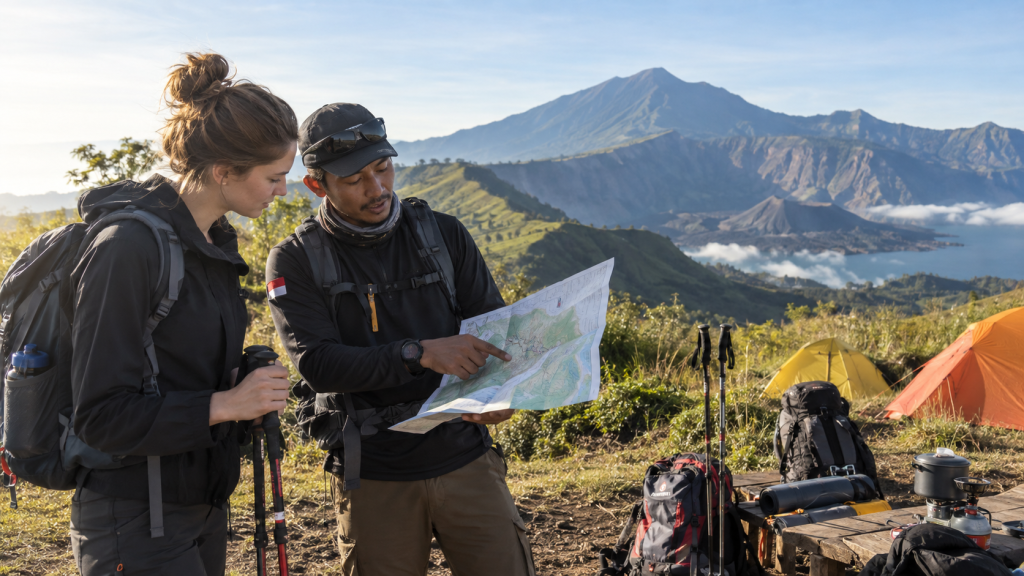
Mount Rinjani trekking is not an ordinary sightseeing activity.
You may walk for several hours each day, experience significant changes in elevation, cross steep or rocky terrain, sleep in tents, and spend long periods far from urban facilities.
Safety management should therefore be one of your main considerations.
Before making a booking, ask:
- How does the guide assess participants’ physical condition?
- What happens if someone cannot continue the trek?
- Can the itinerary be changed when conditions require it?
- What procedures are followed in an emergency?
- How is the camping equipment maintained?
Camping equipment also matters.
The condition of tents, sleeping bags, mattresses, and other equipment directly affects your ability to rest properly after a demanding day of trekking.
Adi Trekker states that its trekking equipment is renewed regularly, which is another practical point travelers can consider when comparing operators.
For official information, prospective hikers can also review the Mount Rinjani National Park trekking procedures and regulations.
Official regulations provide useful information about trekking procedures, group arrangements, waste management, and responsibilities during the trek.
Avoid choosing an operator simply because they advertise the fastest possible itinerary.
A responsible trekking agency should explain the journey realistically and should never suggest that every situation on a mountain can be guaranteed.
5. How Many People Are in One Trekking Group?
Group size is often overlooked when travelers research how to choose a Rinjani trekking agency.
However, the number of participants can significantly change your experience on the mountain.
A larger group may offer a more social experience and can be suitable for backpackers or solo travelers who enjoy meeting other hikers.
A smaller group or private trek may provide more flexibility in terms of pace and overall travel style.
Sharing Trip or Private Trip?
Neither option is automatically better.
The best choice depends on how you prefer to travel.
A sharing trip may be suitable for:
- Solo travelers
- Backpackers
- Travelers with a more limited budget
- People who enjoy meeting other hikers
A private trip may be more suitable for:
- Couples
- Families
- Small groups
- Travelers who want a more personal experience
- Hikers who prefer a more flexible pace
Adi Trekker provides both private and sharing trekking options.
For example, the Mount Rinjani sharing trekking tour is designed for travelers who want to join a small trekking group.
Before joining a sharing trip, ask the operator about the expected number of participants and how the group will be arranged.
Knowing the group size in advance helps set realistic expectations regarding pace, communication, camping arrangements, and the social experience during the trek.
6. What Happens If Weather or Trail Conditions Change?
Mountains are natural environments.
A trekking itinerary cannot always follow exactly what is written on a website.
Weather, trail conditions, participants’ physical condition, and decisions from national park authorities can all affect trekking plans.
A responsible operator should never create the impression that reaching the summit or completing every part of an itinerary can always be guaranteed.
Before booking, ask:
- Who decides whether the journey should continue?
- Can the guide change the trekking pace or itinerary?
- How are participants informed about changes?
- What alternatives are available if part of the route cannot be completed?
- What happens if authorities temporarily restrict access?
The operator’s response can reveal whether the company prioritizes responsible trekking or is mainly focused on selling packages.
For first-time trekkers, clear communication is especially important because you may not yet know what kinds of changes are normal during a mountain trek.
Before your departure, check the official BMKG weather forecast for North Lombok.
However, weather forecasts should still be treated as guidance rather than a guarantee of actual mountain conditions.
Conditions at higher elevations can change quickly.
During the trek, decisions should take current trail conditions, your guide’s assessment, and instructions from relevant authorities into account.
7. Are There Verified Reviews From Previous Trekkers?
A trekking company’s own website will naturally present the strongest side of its services.
That is why independent customer reviews should also be part of your research.
Do not look only at the average rating.
Pay attention to the overall pattern of customer experiences.
Look for comments about:
- Trekking guides
- Porters
- Food quality
- Camping equipment
- Transportation arrangements
- Communication
- How problems were handled
- Whether the actual experience matched the package description
The number and consistency of reviews can also provide useful context about an operator’s track record.
Adi Trekker has received hundreds of traveler reviews and has been organizing Mount Rinjani treks for many years.
Reviews can help increase your confidence in an operator, but they should not replace the other six questions in this guide.
A company with excellent reviews may still offer a package that does not match your personal travel style.
The goal is not simply to find the most popular Rinjani trekking agency.
The goal is to find the operator that best matches your experience level, budget, preferred itinerary, and expectations.
Red Flags to Watch for Before Booking a Rinjani Trek
There are several warning signs that should encourage you to ask more questions before making a payment.
Be cautious if an operator:
- Does not clearly explain package inclusions
- Cannot provide information about guides or porters
- Is not transparent about group size
- Gives vague answers about safety
- Guarantees the summit regardless of conditions
- Provides very limited information about camping equipment
- Is difficult to contact before payment
- Offers a dramatically lower price without explaining why
A cheap trekking package is not automatically a bad package.
However, you need to understand why the price is lower.
Transportation, entrance fees, meals, camping equipment, porters, or other essential services may not be included.
Communication is another important indicator.
If obtaining basic information before booking is already difficult, consider how communication may work once you are already on the mountain.
Rinjani Trekking Agency Checklist Before Booking
For first-time hikers, a good trekking package should simplify as much of the logistics as possible.
Before paying, make sure you have checked:
- Operator experience
- Business or operational location
- Trekking route
- Trekking duration
- Transportation
- National park entrance fees
- Trekking guide
- Porters
- Meals
- Drinking water
- Camping equipment
- Group size
- Private or sharing trip options
- Cancellation or itinerary-change policies
- Weather considerations
- Customer reviews
- Package exclusions
You can also read this Mount Rinjani guide covering routes, permits, weather, and trekking information before deciding on your itinerary.
Environmental responsibility is another factor worth considering.
Adi Trekker applies an eco-tourism and zero-waste approach during its trekking activities.
For travelers who want to experience Mount Rinjani more responsibly, an operator’s commitment to environmental practices can be considered alongside price, safety, facilities, and service quality.
Which Rinjani Trekking Package Should You Choose?
Not every hiker needs the same itinerary.
Some travelers want to reach the summit, while others are more interested in the crater rim, Segara Anak Lake, the Senaru forest, or simply enjoying the mountain at a more comfortable pace.
Adi Trekker offers several trekking options, including 2-day 1-night, 3-day 2-night, and 4-day 3-night itineraries, along with Senaru Crater Rim and other trekking experiences.
Instead of selecting your package based only on duration, consider the following factors.
Your Fitness Level
A shorter itinerary does not necessarily mean an easier trek.
Completing a demanding route in fewer days may require longer trekking hours and greater physical effort each day.
Available Travel Time
Consider your overall Lombok itinerary.
Allow enough time before and after the trek for transportation, preparation, and recovery.
Your Main Goal
A summit trek, crater rim trek, Segara Anak itinerary, or a more relaxed hiking experience may require different routes and durations.
Your Preferred Travel Style
Private and sharing trips provide very different experiences.
A private trip can offer more flexibility, while a sharing trip provides opportunities to meet other travelers.
If you are still comparing your options, explore the complete range of Mount Rinjani trekking packages from Adi Trekker before making your final decision.
Frequently Asked Questions About Choosing a Rinjani Trekking Agency
1. What should I check before choosing a Rinjani trekking agency?
Check the operator’s experience, package inclusions, guides and porters, safety procedures, group size, approach to changing weather conditions, and previous customer reviews. Avoid making your decision based only on price.
2. Is a private or sharing Rinjani trek better?
It depends on your travel style. Sharing trips can be suitable for solo travelers, backpackers, and people who enjoy meeting other hikers. Private trips are generally better for couples, families, groups, or travelers who want more flexibility and privacy.
3. What should normally be included in a Rinjani trekking package?
A practical package will commonly include a trekking guide, porters for group logistics, meals, drinking water, camping equipment, entrance fees, and certain transportation services. Inclusions vary between operators, so always check exactly what is included and excluded before paying.
4. How can I check the weather before trekking Mount Rinjani?
Check the official BMKG weather forecast for the Lombok area before departure and ask your trekking operator for current trail information. Weather forecasts cannot guarantee mountain conditions, so you should also follow your guide’s assessment and instructions from Mount Rinjani National Park authorities.
5. Can beginners trek Mount Rinjani?
Yes, but beginners should choose an itinerary that matches their fitness level and hiking experience. Do not assume the shortest package is automatically the easiest. Discuss your fitness, previous hiking experience, available time, and trekking goals with the operator before booking.
So, How Do You Choose the Right Rinjani Trekking Agency?
The best way to choose a Rinjani trekking agency is to evaluate the complete experience rather than focusing on one factor.
The right operator should be able to explain the package transparently, provide experienced guides and porters, maintain appropriate equipment, communicate safety considerations clearly, and offer a trekking format that matches your needs.
For first-time hikers, spending a little more time researching before booking can prevent significant confusion once the trek has already started.
Adi Trekker has been organizing Mount Rinjani trekking experiences from Senaru for more than 15 years with local guides and porters.
A variety of trekking itineraries and other Lombok travel experiences are also available.
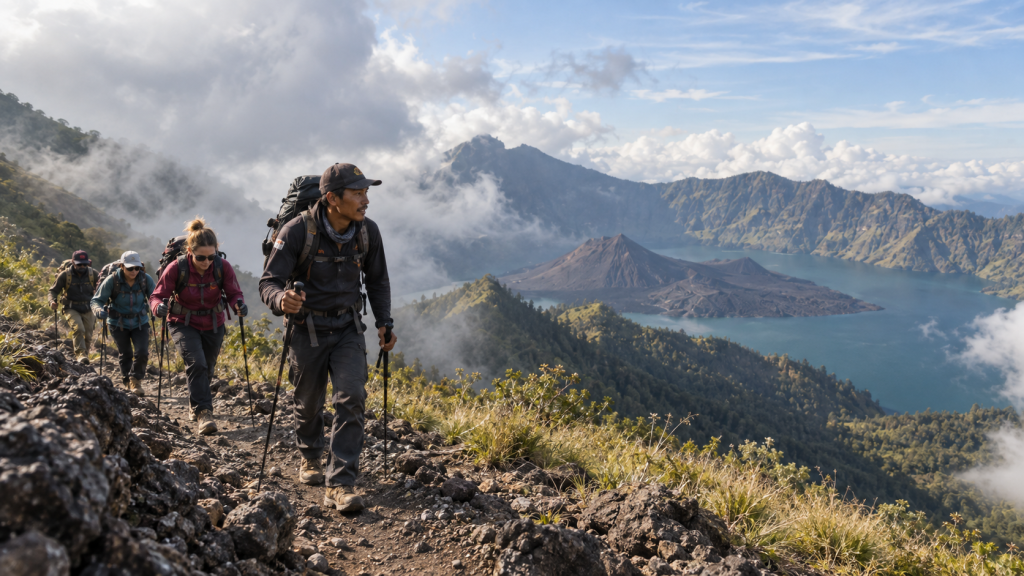
If you are comparing 2D1N, 3D2N, 4D3N, private, or sharing trekking options and are still unsure which one is right for you, discuss your travel date, fitness level, available time, and hiking experience with the team first.
Explore Mount Rinjani trekking options on the official Adi Trekker website
Or get a more personal recommendation:
Contact Adi Trekker on WhatsApp to discuss your Mount Rinjani trekking plan
With the right preparation and the right trekking operator, your first Mount Rinjani adventure can begin with a more informed and confident decision.