
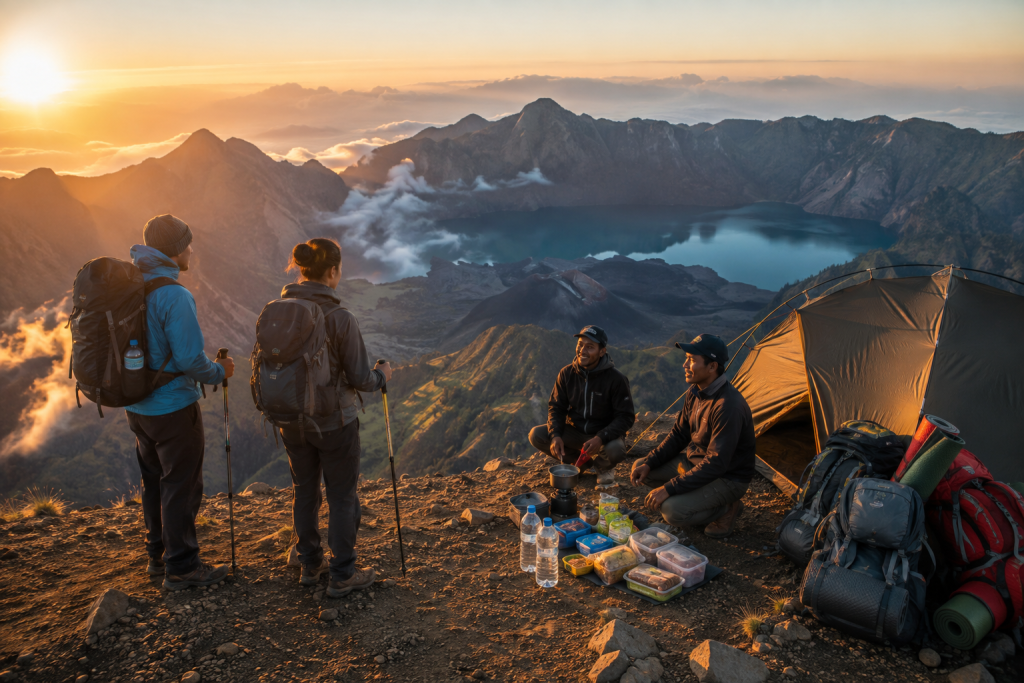
Mount Rinjani rises more than 3,700 meters above Lombok, and the crater lake inside it sits at an altitude most day hikers never come close to reaching. That scale is exactly why Rinjani trekking cost varies so much from one operator to the next. A two hour city tour and a four day mountain expedition simply do not belong in the same price bracket, yet many backpackers still compare quotes without asking what is actually included.
If you have been scrolling through Rinjani packages and wondering why one quote looks so different from another, you are not alone. The gap usually comes down to duration, group setup, and how much support you get along the way. Let’s break it down properly.
Why Rinjani Trekking Cost Varies So Much
Every Rinjani package draws from the same basic ingredients: a guide, porters, meals, permits, and camping gear. What changes is how much of each you get, and whether you’re sharing that support with a group or keeping it private.
A shorter trek naturally needs fewer meals and less porter labor, so it costs less. A longer trek covering more distance, more camps, and a summit push demands more manpower and more supplies, which pushes the price up.
Private trips also cost more per person than sharing trips, simply because the same guide and porter team is covering fewer trekkers. Neither option is wrong. It just depends on your budget and how much you value having the mountain experience shaped around your own pace.
Comparing Adi Trekker’s Main Packages
Here is what typically separates one package from another, based on what each actually includes.
Rinjani Summit 2 Days 1 Night
This is the fastest route to the summit and crater rim, ideal for trekkers short on time but reasonably fit. It includes return transport, national park entrance fees, an English-speaking guide, porters, full board meals, drinking water, and complete camping equipment.
Because it’s compressed into a single overnight, the trekking pace is brisk and the summit push happens early the next morning. It suits backpackers who want the bragging rights without taking a week off.
Rinjani Summit 3 Days 2 Nights
The 3D2N package is the most popular choice for a reason. It gives your body an extra day to acclimatize, spreads the walking distance more comfortably, and still includes the same core inclusions: transport, permits, guide, porters, meals, water, and gear.
The added night usually means camping in a second location, often giving you more time to enjoy the crater lake or hot springs depending on the route. For most backpackers, this length hits the sweet spot between cost and comfort.
Rinjani Summit 4 Days 3 Nights
This is the most immersive option, often combining the Sembalun and Senaru routes so you experience both sides of the mountain, or extending toward Torean for a genuinely off-the-beaten-path finish. All the standard inclusions apply, just spread across more days and more porter support.
Because it demands more logistics, food supply, and staffing over a longer stretch, this package sits at the higher end of the cost range. Trekkers who want a slower pace, more photo opportunities, and less rush toward the summit tend to prefer it.
Senaru Crater Rim 2 Days 1 Night
Not everyone wants to stand at the summit at sunrise, and that’s fine. The Crater Rim package skips the final summit push and instead focuses on reaching the rim overlooking the crater lake, which is still a genuinely rewarding view.
It includes the same core support (guide, porters, meals, transport, permits, and camping gear) but generally costs a bit less than the full summit packages since it covers a shorter, less physically demanding route.
One Day Hike
For travelers with limited time or those testing their fitness before committing to a longer trek, the One Day Hike is the lightest option. It still includes a guide, transport, and park entrance fees, but without overnight camping or the same volume of meals and porter support.
This is naturally the most affordable entry point into Rinjani, though it only scratches the surface of what the mountain offers.
What Can Push Your Rinjani Trekking Cost Higher
A few factors sit outside the base package price and are worth planning for.
Private versus sharing setup. Choosing a private trip means your own guide and porter team, which raises the per person cost compared to joining a sharing group.
Personal gear rental. While Adi Trekker provides camping equipment that’s renewed yearly, items like personal hiking poles, headlamps, or extra warm layers are usually the trekker’s own responsibility.
Tips for guides and porters. Not mandatory, but customary in Indonesian trekking culture, and worth budgeting a little extra for.
Extended add-ons. Some trekkers combine their Rinjani trek with Gili islands snorkeling, waterfall tours, or a Tetebatu village visit, which adds to the overall trip cost but rounds out the Lombok experience nicely.
How to Choose the Right Package for Your Budget
Start with your timeline. If you only have two days, the 2D1N Summit or the Crater Rim package makes sense. If you can spare three to four days, you’ll get a noticeably more comfortable and scenic trip for a moderate increase in cost.
Next, think about group setup. Sharing trips are more budget friendly and a great way to meet fellow travelers, while private trips suit those who want full control over pace and schedule.
Finally, factor in what actually matters to you. Quality gear, an experienced English-speaking guide, and a genuine commitment to eco tourism inside the national park are worth paying for, especially on a mountain where safety and preparation make all the difference.
Final Thoughts
Rinjani trekking cost isn’t just a number. It reflects the guide expertise, porter support, meals, permits, and gear that go into getting you safely up one of Indonesia’s most iconic volcanoes and back down again. Once you understand what each package actually includes, comparing options becomes far less confusing.
Adi Trekker has organized Rinjani treks for more than 15 years, working with local guides and porters from Senaru and Sembalun who know the mountain inside out. Whether you’re after a fast 2D1N summit push or a slower 4D3N crossing between routes, there’s a package built around how you want to experience Rinjani.
Ready to plan your trek? Reach out to Adi Trekker directly to get a clear quote based on your dates, group size, and preferred route.