
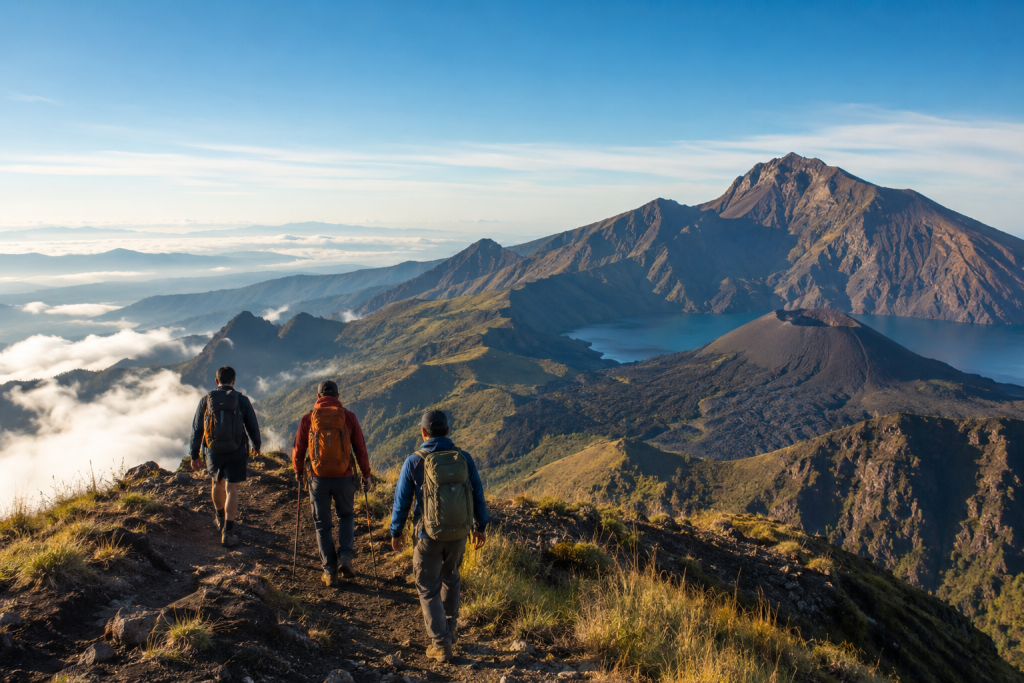
Mount Rinjani sits closed for three full months every single year, and yet it still pulls in tens of thousands of hikers during the nine months it’s open. That single fact tells you almost everything about why timing matters here. Pick the wrong week and you might spend two days climbing through fog for nothing. Pick the right one and you’ll stand above the clouds watching the sun rise over Segara Anak crater lake, exactly the way it looks in every photo that convinced you to book this trip.
If you’re planning your first volcano trek, the question “when should I go” matters just as much as “which route should I take.” This guide walks through the whole year, month by month, so you can match the weather to what you actually want out of the climb.
Why Timing Matters So Much on Rinjani
Rinjani isn’t a mountain you can climb on a whim. It’s an active volcano with steep, exposed ridgelines, and the national park authority closes it entirely during the wettest months for safety and environmental recovery.
Outside the closure, weather still swings a lot within the open season. Some months hand you bone-dry trails and postcard skies. Others are technically open but come with slick paths, low cloud, and unpredictable afternoon rain.
For a first-timer, this isn’t a minor detail. It’s the difference between a trek that feels achievable and one that feels miserable before you’ve even reached the crater rim.
When Is Rinjani Actually Closed?
Every year, Mount Rinjani National Park shuts its trails from January through March. This closed season lines up with Lombok’s peak rainy season, when landslide risk climbs sharply and the park needs time to let heavily used trails recover.
No package, no guide, and no amount of persuasion gets you onto the mountain during this window. We’ve written a full breakdown of why the closure happens and what it means for trip planning in our guide to Rinjani’s closed season, worth a look if January to March is the only time that fits your schedule.
The Dry Season: April Through December
Once the park reopens, you’re looking at a nine-month window, though conditions still shift noticeably from one end of it to the other.
April and May: Green, Quiet, and Just Reopened
April marks reopening, and the landscape is at its lushest, still soaked in green from the rainy season that just ended. Trails can carry some leftover mud early in the month, but conditions dry out fast.
Crowds are thin here. If a quieter trek with fewer people at the summit matters to you, April and May are genuinely underrated.
June to September: The Dry, Clear Stretch
This is Rinjani at its most reliable. Rainfall drops close to zero, skies stay clear for long stretches, and visibility toward Segara Anak and the summit is at its best all year.
Temperatures do drop noticeably at higher elevation. Expect cold pre-dawn summit pushes, so warm layers aren’t optional even when daytime conditions feel comfortable.
July and August are the busiest months of the year, largely because they overlap with peak international holiday travel. Crowds at the crater rim campsite are heavier, and the summit trail can feel like a queue in the final push before sunrise.
September offers a genuine sweet spot. Weather stays dry and stable, but the July and August rush has passed, so trails and campsites feel noticeably calmer.
October and November: The Turning Point
October still trends dry early on, but afternoon showers start becoming more common as the month goes on. Trails hold up fine, though you should pack rain protection just in case.
November is the true transition month. Rain becomes more frequent, cloud cover thickens, and while the park often remains open, conditions can shift quickly day to day.
December: The Final Window Before Closure
December sits right at the edge of the rainy season. Some years offer decent stretches of dry weather early in the month, while others see rain arrive earlier than expected.
Because December is unpredictable, it suits flexible travelers more than those chasing guaranteed clear skies. Anyone locked into a fixed date should build in a backup day where possible.
Matching the Month to Your Travel Style
Different hikers want different things out of this climb, so here’s a quick way to think about it based on priority.
Clearest skies and best summit views: June through September, with July and August being the driest of all.
Fewer people on the trail: April, May, September, and early October all offer a calmer experience without sacrificing much in the way of weather.
Greenest, most photogenic landscape: April and May, right after the rains, when waterfalls run fuller and the slopes are at their most vivid.
Flexible schedule, open to some risk: Late October through December, understanding that rain becomes more likely as the season wears on.
What to Pack, Whatever Month You Choose
Even in the driest months, Rinjani’s summit sits cold enough for frost before dawn, and conditions can change within a single day. Layered clothing, a proper headlamp, and reliable rain protection matter regardless of season. Our detailed Rinjani packing list covers exactly what to bring for each type of package, so you’re not guessing the night before your trek.
Planning the Best Time to Climb Rinjani With Adi Trekker
Choosing the best time to climb Rinjani really comes down to matching the season to what you want most, whether that’s the clearest possible sunrise, a quieter trail, or the greenest scenery of the year. What stays constant, whichever month you choose, is the need for a well-prepared team who knows these trails in every kind of weather.
Adi Trekker has organized Rinjani treks from Senaru for more than 15 years, with local guides, fresh gear renewed annually, and full board packages built for first-timers and experienced hikers alike. Get in touch with Adi Trekker to check availability for your preferred month and start planning a summit trek that actually matches the weather you’re hoping for.