
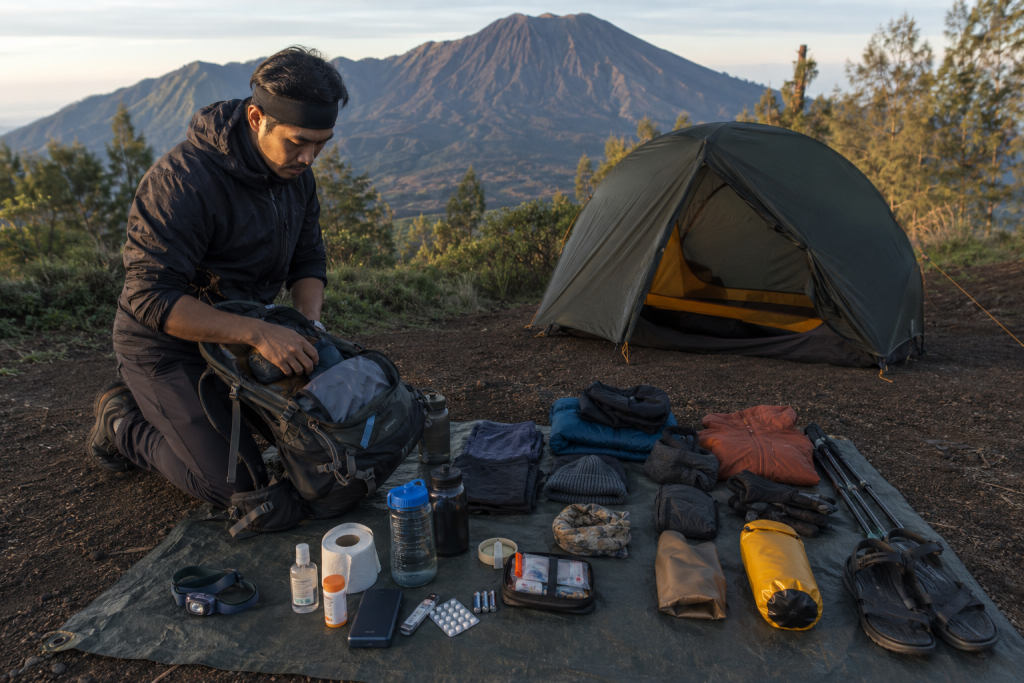
Every year, thousands of hikers arrive in Senaru convinced that a warm jacket and a bottle of water will get them to the summit. Then the crater rim wind hits at three in the morning, temperatures drop close to freezing, and half of them realize their packing list was missing a few critical pieces. A good rinjani packing list is not about overpacking. It is about knowing exactly what your body and your trek actually need.
This guide walks you through the 20 items first-time trekkers most often forget, organized so you can pack in order without missing a thing.
Why a Rinjani Packing List Actually Matters
Rinjani is not a casual day hike. You are climbing an active volcano that rises above 3,700 meters, and the temperature swing between the trailhead and the summit can feel like moving between two different countries.
Most trekking injuries and mid-trek meltdowns on Rinjani come down to preventable packing mistakes. Wet cotton shirts, broken-in-the-wrong-place boots, and forgotten headlamps turn a manageable climb into a miserable one.
What Adi Trekker Already Packs For You
Before you start stuffing your bag, it helps to know what you do not need to buy. Every Adi Trekker package already includes return transport, national park entrance fees, an English-speaking guide, porters, full board meals, safe drinking water, and complete camping equipment such as tents and cooking gear.
That means your sleeping bag, sleeping mat, and tent are already sorted by the team. Your job is to focus on the personal items that make the difference between a comfortable night and a cold, sleepless one.
Clothing Essentials You Cannot Skip
Base and Insulating Layers
- Thermal base layer. A snug, moisture-wicking top and bottom keep sweat off your skin during the steep climb, then trap warmth once the sun goes down.
- Fleece or lightweight insulated jacket. This becomes your best friend at the crater rim campsite, where temperatures can drop sharply after dark.
- Quick-dry trekking pants. Skip heavy denim entirely. Lightweight, breathable pants dry fast if they get damp from sweat or a passing shower.
- Buff or neck gaiter. It blocks wind, doubles as a hat, and shields your neck from dust on the drier sections of the trail.
Sleeping Gear for Cold Crater Nights
Since your tent and sleeping bag are already covered by your package, focus on the smaller items that boost warmth without adding much weight.
- Sleeping bag liner. It adds several extra degrees of warmth on cold nights and keeps the shared sleeping bag cleaner during your trip.
- Warm sleeping socks. A dedicated dry pair just for sleeping prevents cold feet from ruining your rest before the summit push.
Footwear That Can Make or Break Your Climb
Boots and Socks
- Broken-in trekking boots. Never wear brand new boots on Rinjani. Ankle support matters on the loose volcanic sand near the summit.
- Wool or synthetic hiking socks. Bring at least two pairs. Cotton socks trap moisture and are a fast track to blisters.
- Gaiters. These keep sand and small stones out of your boots on the notoriously loose summit trail, saving you from constant stops to empty your shoes.
Personal Medicine and Health Items
- Altitude or motion sickness tablets. Even mild altitude discomfort can slow you down, so pack what has worked for you before, along with basic pain relief.
- Blister plasters and moleskin. Apply these at the first sign of a hot spot, well before a full blister forms.
- Personal prescription medication. Bring more than you think you need, since there are no pharmacies once you are on the mountain.
Electronics Worth the Extra Weight
- Power bank. There is no charging point on the trail, and you will want battery life for photos at sunrise.
- Headlamp with spare batteries. The summit push starts well before dawn, so a reliable headlamp is not optional gear, it is essential gear.
- Waterproof phone pouch or dry bag. Sudden mountain showers happen fast, and a soaked phone is an easy problem to avoid.
Snacks That Keep Your Energy Up
- Energy bars or trail mix. Full meals are provided, but a stash of familiar snacks helps between meal stops during long climbing hours.
- Electrolyte sachets. Mixed into your water, these help replace what you lose through sweat on the steep, exposed sections of trail.
Weather Gear for Rinjani’s Unpredictable Skies
- Rain poncho or waterproof shell jacket. Weather on Rinjani shifts quickly, and staying dry is far easier than drying out afterward.
- Warm beanie and gloves. The wind at the crater rim and summit can be sharp, and covered hands and ears make a real difference to comfort.
- Sunscreen and a wide-brim hat. Sections of the Sembalun route are fully exposed, so sun protection matters just as much as cold weather gear.
Packing Smart Makes the Climb Enjoyable
A strong rinjani packing list is really about balance. Bring the right personal gear, trust your operator for the heavy equipment, and you free yourself up to actually enjoy the climb instead of fighting the cold or nursing blisters.
Adi Trekker has spent more than 15 years guiding first-time hikers safely up Rinjani through the Senaru, Sembalun, and Torean routes, with fresh gear, experienced local guides, and a genuine commitment to keeping the national park clean for the next group of trekkers. If you are ready to turn this packing list into an actual trip, reach out to Adi Trekker to book your Rinjani package and get personal guidance on exactly what to bring for your dates.